 IEMPS BOOK
COLLECTIONARTIFICIAL INTELLIGENCE TOOLS IN EDUCATION FOR SUSTAINABILITYGeneral Purpose Books
Available for purchase
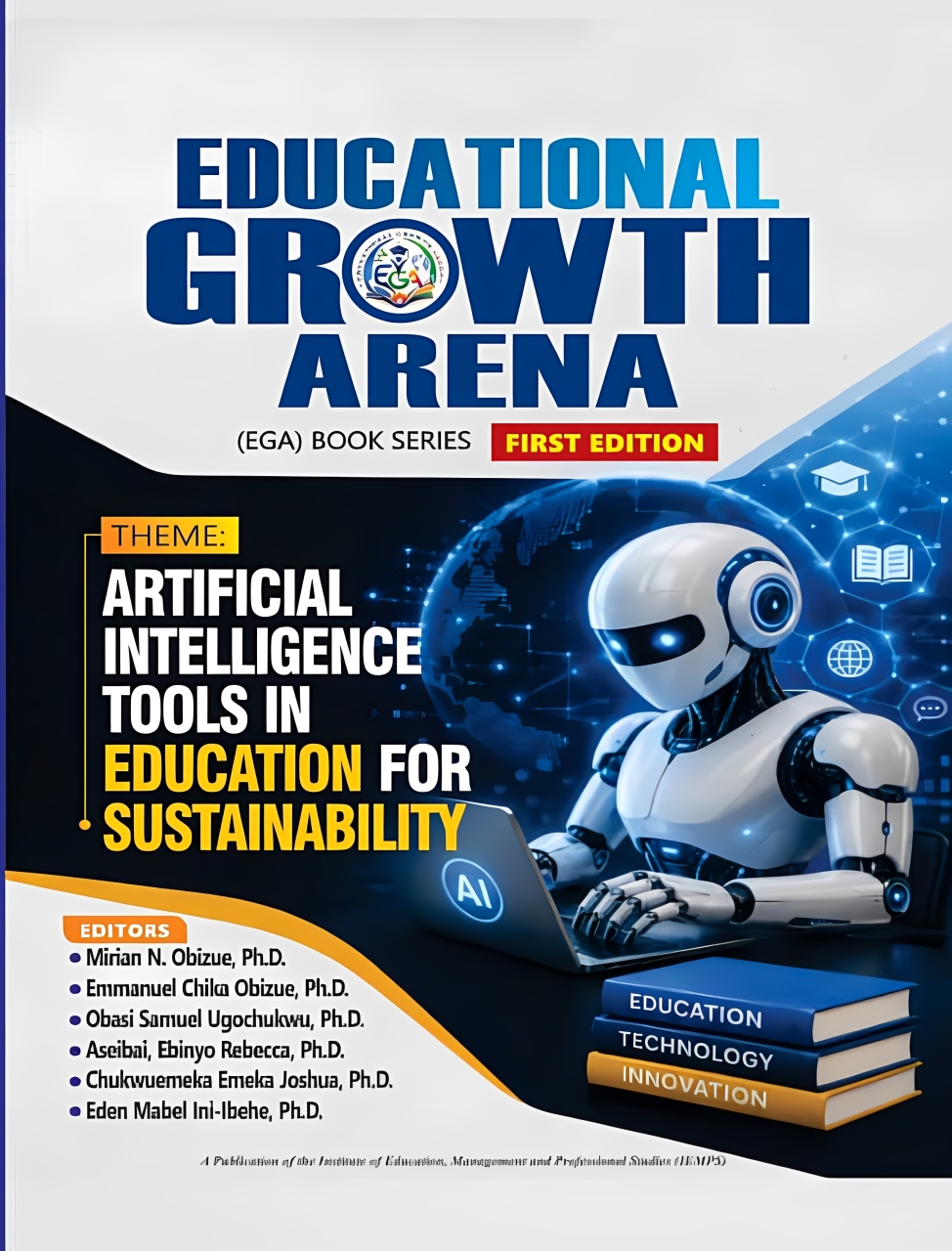
ARTIFICIAL INTELLIGENCE TOOLS IN EDUCATION FOR SUSTAINABILITY
The current changes are in two dimensions. The first one is a planetary crisis of climate change, biodiversity loss, scarcity of resources, inequality, etc. – a crisis that requires a generation of citizens capable of systemic thinking, responsible action, and future thinking beyond the way we do business as usual. The second is a technological shift; and AI reshapes teaching, learning, and understanding.
Sample listing. Add verified publication details and, for Google Scholar eligibility, the public full-text PDF.
Summary
The current changes are in two dimensions. The first one is a planetary crisis of climate change, biodiversity loss, scarcity of resources, inequality, etc. – a crisis that requires a generation of citizens capable of systemic thinking, responsible action, and future thinking beyond the way we do business as usual. The second is a technological shift; and AI reshapes teaching, learning, and understanding. This book is located at the nexus of these two and starts with a simple premise: the education tools we use for sustainability education are as important as the education content we provide. Education for Sustainable Development (ESD) has been emphasizing for decades that teachers should not use ESD to impart only facts to their students but teach them how to adapt to complex situations, which includes learning to think beyond a systems perspective, reason antagonistically, act in a collaborative sense on various differences, and learn to act under uncertainty. These are far from simple skills to teach and the traditional class, with its time, resources, and standardized approaches, may often find that it cannot keep its promise. Perhaps for the first time, everything done with artificial intelligence is new, and without doubt, worth the caution: Modelling complex systems interactively, personalizing learning pathways at scale, simulating futures and consequences and making large volumes of data legible which learners won't encounter in their lives otherwise. This book isn't about the silver bullet with AI. It considers it a tool, a bundle of power, flaws and values that must be learned by teachers to be used as a critical literacy with the same critical literacy that they wish to imbue their students. For teaching and learning, a chatbot that facilitates a student to explore the trade-offs of a circular economy is only as good as the pedagogy that frames the conversation. The value of a predictive model that presents local climate risk in a visual, spatial format is directly related to the capacity of the community to challenge the assumptions and sources of information being presented. As contributors return over and over to this dual awareness throughout the chapters that follow, AI's potential to be pedagogically transformative is only as great as its use is bound to rich and thoughtful educational design, ethical reflection, and the determination to grapple with its own environmental and social implications. This last fact would have been worthy to have been written copiously in this preface alone. What an awkward paradox that we would be using tools that we taught to promote sustainability practices that are themselves unconcerned by their energy use, working conditions or the fact that they tend to centralise power around a few companies or institutions. This book does not turn its back on this tension. Several chapters invite readers to embrace two ideas at once: that AI can be a good partner to sustainability education but that its partnerships should also be assessed along sustainability lines, including resource usage, accessibility, and data justice, to name a few. The chapters themselves reflect the practices and ideas of some of the educators, researchers, technologists, and practitioners who are already using these tools in classrooms, universities, community programs, and other informal settings across the globe. The reader will learn about intelligent tutoring systems and adaptive learning platforms for environmental curricula, generative AI to develop simulations, case studies, and maternal sustainability topics, as well as data visualization tools and machine learning applications to integrate real-world environmental data in the education space and their respective pedagogical, ethical, and infrastructural challenges. Optimism and case studies are matched with conceptual frameworks; and while readers will likely not get a comprehensive list of tools to implement, they should emerge more as a thinking tool to consider how technology and sustainability education can and where it may not be brought together. This book is aimed at a wide audience of classroom teachers seeking practical inroads, curriculum designers and instructional technologists developing the next generation of learning platforms, researchers scrutinizing evidence-based solutions in AI in education, and policymakers determining how empirical education systems integrate with AI tools. It is also written for the skeptics, because skepticism is part of the mindset to sustainability that this book is advocating.